


Water damage in a home is more involved to address than most people expect. Water damage restoration is about drying out the structure, preventing mold, and restoring everything that was affected. Understanding how the restoration process works helps homeowners know what to expect and how to evaluate whether the job is being done correctly. 
Step 1: Emergency Response and Water Extraction
The first priority is stopping the spread. If there is still an active water source — a burst pipe, an open roof penetration, a failed sump pump — that needs to be addressed before anything else.
Once the source is controlled, extraction begins. Professional water damage restoration services start with immediate water extraction to prevent further issues. Commercial extraction units are far more effective than consumer-grade shop vacs or mops at removing water from porous materials, and speed matters significantly at this stage.
Step 2: Moisture Assessment
After extraction, the visible water is gone, but the problem is not. Water moves into walls, under flooring, through insulation, and along framing. Moisture meters and thermal imaging help technicians identify where water has traveled that is not immediately visible.
This assessment shapes the entire scope of the project. Without it, it is easy to miss saturated areas that will develop mold or cause structural damage over the following weeks.
Step 3: Structural Drying
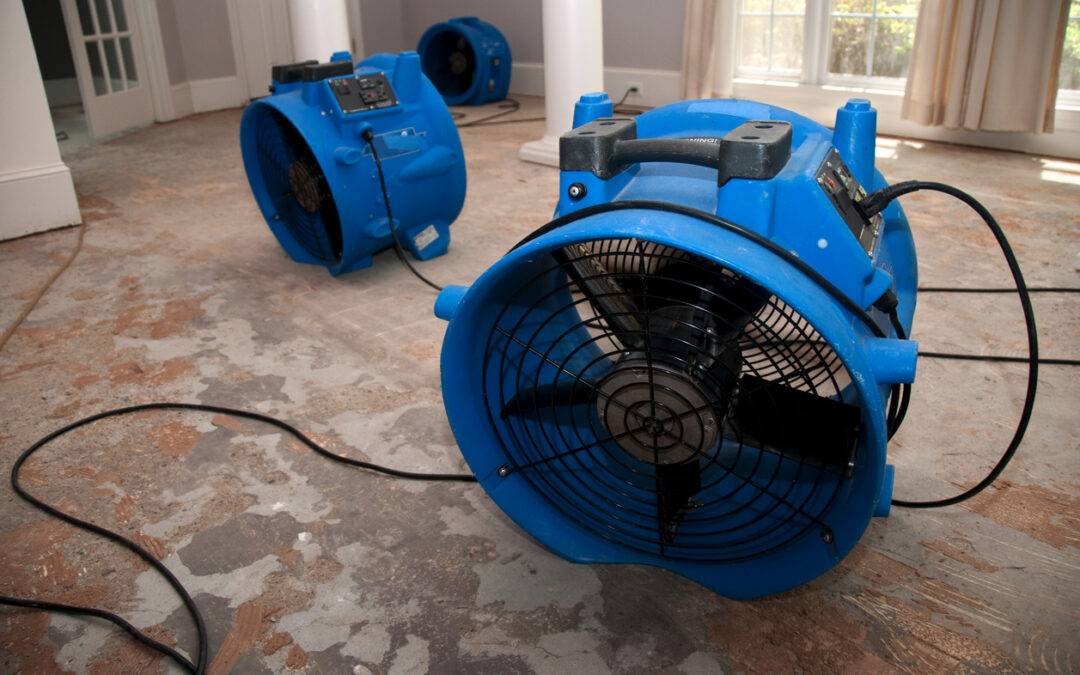
Drying out a water-damaged structure takes time and the right equipment. Industrial air movers and dehumidifiers run continuously — often for several days — to pull moisture from building materials. This phase is a critical part of the water damage restoration process. The goal is to bring wood framing, drywall, and subfloors back to acceptable moisture levels before reconstruction begins.
Cutting corners on drying is one of the most common causes of mold developing after a water damage event. Even materials that feel dry to the touch can still hold enough moisture to support mold growth.
Moisture readings are taken regularly during this phase to track progress and confirm that drying is actually happening at the expected rate.
Step 4: Removing Affected Materials
Some materials cannot be dried effectively and need to be removed. Drywall that has been saturated absorbs water into its core, and once that happens, it is generally more practical to replace it than to attempt to dry it in place. Wet insulation, flooring, carpet, and soft furnishings often fall into this category as well.
Removing these materials also allows better access to the framing and cavity behind them, where moisture tends to linger longest.
Step 5: Mold Prevention and Treatment
Once the structure is dry and affected materials are removed, surfaces are treated with antimicrobial solutions to address any residual spores and prevent mold from establishing itself in the restored areas. Effective water damage restoration also addresses potential mold risks to ensure a safe environment. Virginia’s climate — warm summers, seasonal humidity, and the moisture that comes with nor’easters and fall storms — creates real mold risk if water damage is not addressed thoroughly.
If mold has already begun to develop by the time restoration begins, remediation is included in the scope.
Step 6: Reconstruction
After the structure is fully dry and treated, reconstruction begins. This is the phase where drywall is hung and finished, flooring is replaced, insulation is reinstalled, and the space is returned to normal. Some water damage restoration companies handle reconstruction in- house, which keeps the project under a single point of contact and simplifies the timeline.
Reconstruction marks the final stage of water damage restoration. A project is not complete until the home looks and functions the way it did before the damage occurred.
What Affects the Timeline
The extent of water damage, how long the water was present, the number of rooms or floors involved, and whether mold is also a factor all influence how long the restoration will take. A small, quickly addressed leak might be resolved in a few days. Significant flooding that is not addressed immediately can take several weeks to fully resolve.
The sooner the process starts, the shorter it tends to be.
Water Damage Restoration in Winchester, VA
If you are dealing with water damage in the Winchester area and looking for nearby restoration help, Gear Clean can assess your situation and get the process started right. For expert water damage restoration in Winchester, VA, trust our team to restore your home efficiently. Our team handles everything from initial extraction to final repairs, and we work carefully to ensure the job is completed. Contact us today to schedule an assessment and get your home on the path to recovery.