


Water damage does not always announce itself clearly. Some of the most significant cases develop slowly, with signs that are easy to overlook or explain away until the problem has grown considerably. Learning to recognize the indicators early gives you a much better chance of addressing damage before it becomes a structural issue. Early detection and prompt water damage restoration can prevent costly repairs and maintain the safety of your home. `
`
Visible Water Stains and Discoloration
Yellow, brown, or gray stains on ceilings or walls are one of the clearest signs of water intrusion. They typically appear as ring-shaped discolorations and often indicate a leak that is intermittent — getting wet and drying, getting wet and drying — rather than a constant drip.
If you notice these stains, contacting a water damage restoration professional is crucial to prevent further deterioration. Stains on a first-floor ceiling directly below a bathroom are a common example. They point either to a plumbing leak above or a problem with the toilet, tub, or shower seal. Do not assume a stain is old just because the surface feels dry when you touch it.
Warped or Buckled Flooring
Wood and laminate flooring that has absorbed moisture will swell, warp, cup, or buckle. If you notice sections of flooring that are lifting, have gaps, or feel soft or spongy underfoot, moisture is likely the cause. This can occur from a slow leak below the subfloor, basement seepage, or condensation in a crawl space under the affected room.
Addressing warped flooring quickly with water damage restoration services can help save your subfloor and prevent mold. Flooring near exterior walls, along basement perimeters, and in bathrooms and kitchens is worth checking periodically.
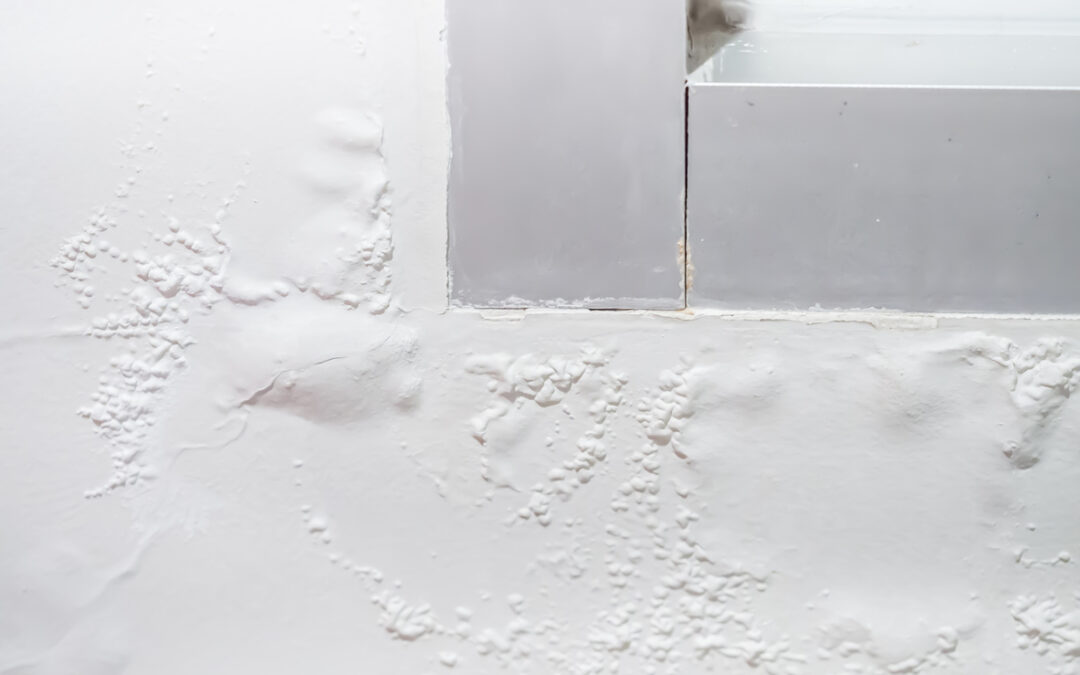
Peeling Paint or Bubbling Wallpaper
When moisture gets behind a painted surface or wallpaper, it breaks the bond between the material and the wall. Paint begins to peel, crack, or bubble, and wallpaper pulls away from the surface. This is often more pronounced near windows and exterior walls, and in areas with limited ventilation.
Such signs often signal the need for water damage restoration, especially if the issue recurs in the same area. It can be easy to chalk this up to old paint or poor application, but when it appears in areas prone to moisture, it warrants a closer look at what may be behind the wall.
A Persistent Musty Smell
The earthy, damp odor associated with mold and mildew typically indicates that moisture has been present long enough for organic material to begin breaking down. If the smell is concentrated in a particular area — a basement corner, a closet on an exterior wall, a bathroom — that is where the investigation should start.
A persistent musty smell can indicate hidden leaks that may require comprehensive water damage restoration. This smell does not go away on its own. Cleaning surfaces and improving ventilation might temporarily reduce it, but if the moisture source is not addressed, it returns.
Higher-Than-Normal Water Bills
A sudden, unexplained increase in your water bill without a change in usage habits can indicate a hidden leak. Underground supply lines, pipes inside walls, and toilet fill valves that run continuously are all common sources of slow leaks that do not produce visible water but can cause significant water damage over time.
Comparing month-to-month bills and checking your meter while all water is turned off are quick ways to identify whether water is moving when it should not be.
Foundation Cracks or Basement Seepage
Water that pools against a foundation or enters through cracks in a basement wall is a persistent structural threat. In Winchester and throughout the Shenandoah Valley, seasonal rain and snowmelt can put significant pressure on foundations, particularly in homes where grading, gutters, and downspout extensions are not managing runoff effectively.
Efflorescence — the white, chalky mineral deposits that appear on basement walls — is a sign that water has been moving through concrete. It is not an emergency indicator on its own, but it signals that moisture is consistently reaching the interior face of the wall.
Mold Growth in Multiple Areas
When mold appears in more than one location in a home, it is often a sign of a moisture problem that has been going on for some time. Mold in a bathroom is relatively common and often addressable. Mold in a closet on an interior wall, in a hallway ceiling, or in a basement that does not have any obvious plumbing connections points to a more systemic moisture issue.
Multiple mold sites suggest that water or humidity is moving through the home in ways that are not immediately obvious, and that warrants a professional assessment.
Water Damage Restoration in Winchester
If you are seeing any of these signs in your home, the sooner you have them evaluated, the better. Gear Clean provides water damage restoration in Winchester and surrounding communities. Our team can assess the damage, identify the source, and develop a plan to restore your home properly. Contact us today to schedule a visit.